


Three-cornered leek
Invasive Species Information

Reproduction: The seeds of Three-cornered garlic are spread naturally by ants and other insects.

Three-cornered leek is a bulbous flowering plant in the genus Allium (onions and garlic) native to the Mediterranean basin. This spring-flowering bulb carries 2cm long bell-like white flowers (10-18mm) on stems which are three-sided and about 30cm high. Along the centre of each petal is a narrow green line and between 3 and 15 flowers are arranged in a drooping one-sided umbel not unlike that of a Bluebell.
The leaves are very markedly angled, coming three to a plant from the base. From April to June these flowers can be seen growing along roadsides, in hedges, banks and other shady places. The leaves have a distinct onion smell when crushed.
Three-cornered leek flower
Colour: Mid-green
Flower: White with green line on each petal
Leaf: Green with distinct angle
Stem: 3 sided (triangular)
Smell: Onion / Garlic


How To Identify Three-cornered leek?
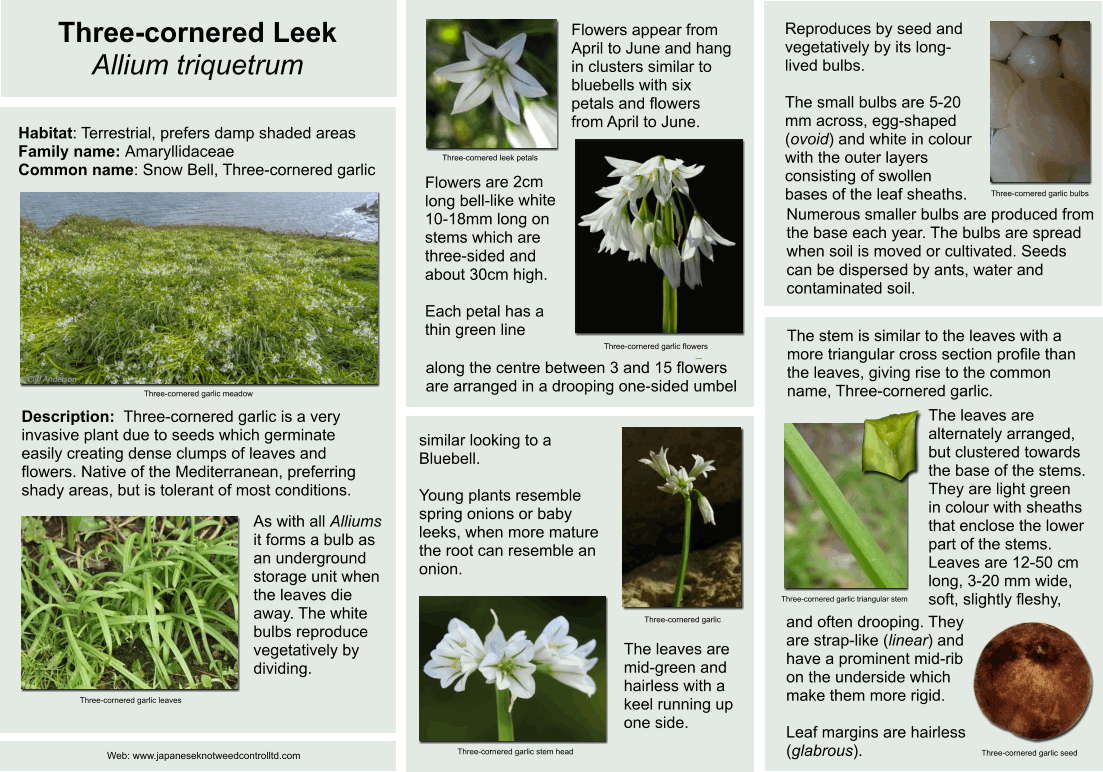
Three-cornered leek stem

Three-cornered leek - Allium triquetrum ID Guide
Three-cornered garlic flowers
Three-cornered leek roots
Why Is Three-cornered leek A Problem?
Threatens biodiversity where the plant forms early season dense monocultural masses, particularly at protected sites.
Three-cornered leek is known to have serious impacts on the natural habitats that it invades and is very aggressive, having the potential to rapidly occupy large tracts of land.
Plants forms dense and persistent stands that totally dominate the ground-flora when conditions are suitable (moist and shaded). These stands crowd out and displace the indigenous grasses and groundcovers and can also seriously impede the regeneration of the over-storey vegetation.
What Is Three-cornered leek - (Allium triquetrum)?
Habitat: Terrestrial. Prefers damp shaded areas
Distribution in Ireland: Widely distributed in the south and south east
Status: Established
Family name: Amaryllidaceae
Common name/s: Three-cornered garlic, wild garlic
European Communities (Birds and Natural Habitats) Regulations 2011 non-native invasive plant species A-Z (Updated 2017)
There are currently 35 invasive plant species listed in the European Communities (Birds and Natural Habitats) Regulations (annex 2, Part 1)...
Click on a species from the following list to find out more regarding non-native species subject to restrictions under Regulations 49 and 50.
-
American Skunk-Cabbage - Lysichiton americanus
-
Red Alga - Grateloupia doryphora
-
Waterweeds - Elodea (all species)
Additional Non-Native Plant Species identified as Medium Risk on Ireland's Biodiversity List...
Common name
Barberry
Brazilian waterweed
Butterfly-bush
Canadian-fleabane
Clover broomrape
False acacia
Garden lupin
Giant rhubarb
Hairy rocket
Himalayan honeysuckle
Himalayan knotweed
Holm oak
Pampas grass
Pitcherplant
Red oak
Rock cotoneaster
Salmonberry
Sycamore
Three-cornered garlic
Traveler's-joy
Species name
Lysichiton americanus
Antithamnionella ternifolia
Ribes nigrum
Egeria densa
Buddleja davidii
Conyza canadensis
Codium fragile ssp. tomentosoides
Pseudotsuga menziesii
Solidago gigantea
Gunnera manicata
Persicaria wallichii
Lonicera japonica
Euphorbia esula
Acaena ovalifolia
Matteuccia struthiopteris
Sarracenia purpurea
Bunias orientalis
Environment
Terrestrial
Terrestrial
Terrestrial
Marine
Terrestrial
Terrestrial
Freshwater
Terrestrial
Terrestrial
Terrestrial
Terrestrial
Marine
Terrestrial
Terrestrial
Terrestrial
Terrestrial
Terrestrial
Terrestrial
Terrestrial
Terrestrial
Terrestrial
Terrestrial
Terrestrial
Terrestrial
Terrestrial
Terrestrial
Freshwater
Terrestrial
Terrestrial
Terrestrial
Terrestrial
Terrestrial
Terrestrial
Marine
Terrestrial
Terrestrial
Terrestrial
Terrestrial
Terrestrial
Terrestrial
Terrestrial
Terrestrial
Terrestrial
Terrestrial
Terrestrial
Terrestrial
Freshwater
Terrestrial
Risk score
14
15
17
15
14
14
17
17
14
17
16
16
15
14
17
17
17
16
17
14
16
14
14
15
14
16
14
16
14
14
14
14
14
14
14
17
14
14
14
15
15
17
17
14
16
15
14
15