


Himalayan Balsam - Invasive Species Information

What is Himalayan Balsam - (Impatiens glandulifera)?
Habitat: Terrestrial. Prefers wet & damp areas.
Distribution in Ireland: Abundant across Ireland
Status: Established
Family name: Balsaminaceae
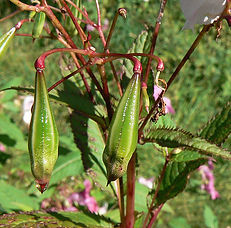
Reproduction: Each plant can produce up to 1500 seeds a year and their explosive pods can shoot seeds up to 7m away, which then stick to shoes and car tyres. Bees are also attracted to the flowers and can spread the seeds widely.
Himalayan balsam is an alien invasive plant introduced to Ireland in the mid 19th Century mainly by Victorian gardeners.


Himalayan balsam seed dispersal
Himalayan balsam - Impatiens gladuliera flower
It is the tallest annual plant in the Ireland and can grow to a height of 7m (2m typical).
Every year Himalayan balsam grows exponentially and it’s reached a point where people are starting to notice it everywhere.
Himalayan Balsam is often found in ditches, ponds, canals and riversides for example but it is increasingly being seen on just slightly damp ground, such as road verges and hedgerows with wet or damp soil..
Even mowing verges and roadsides often does not catch all the plants, and they can quickly regain ground of even just a few are allowed to seed.
How To Identify Himalayan Balsam?
Flower: Bright pink flower
Leaf: Slender & Serated

![Himalayan Balsam [Indian Balsam] - Impatiens glandulifera ID Guide V8](https://static.wixstatic.com/media/d4f7d5_829bd173e068401f93434f3616c7fd29~mv2.png/v1/fill/w_428,h_298,al_c,q_85,usm_0.66_1.00_0.01,enc_avif,quality_auto/Himalayan%20Balsam%20%5BIndian%20Balsam%5D%20-%C2%A0Impatiens%20glandulifera%20ID%20Guide%20V8.png)
Himalayan balsam - Impatiens gladuliera ID Guide
Himalayan balsam - seed pods
Himalayan balsam leaf
Why Is Himalayan Balsam A Problem?
Once established Himalayan balsam, which can grow up to
3m in height, outcompetes native species, erodes riverbanks, and clogs up rivers and streams leading to flooding. It is now widespread throughout Ireland.

Himalayan balsam invasive stand
Control is difficult, firstly because it’s very difficult to chop down or pull all plants and secondly the seeds often keep arriving from neighbouring areas (such as upriver or from neighbouring land you don’t own).
On roadsides, people should inform local authorities.
European Communities (Birds and Natural Habitats) Regulations 2011 non-native invasive plant species A-Z (Updated 2017)
There are currently 35 invasive plant species listed in the European Communities (Birds and Natural Habitats) Regulations (annex 2, Part 1)...
Click on a species from the following list to find out more regarding non-native species subject to restrictions under Regulations 49 and 50.
-
American Skunk-Cabbage - Lysichiton americanus
-
Red Alga - Grateloupia doryphora
Non-Native Plant Species identified as High Risk on Ireland's Biodiversity List...
Common name
Species name
Environment
Terrestrial
Freshwater
Terrestrial
Terrestrial
Marine
Freshwater
Freshwater
Freshwater
Terrestrial
Terrestrial
Terrestrial
Terrestrial
Marine
Terrestrial
Freshwater
Freshwater
Freshwater
Terrestrial
Freshwater
Marine
Risk score
20
19
18
19
18
19
21
20
19
18
18
19
19
20
20
19
20
20
20
18