


How Fast Does Japanese Knotweed Grow and How to Stop It
Japanese knotweed has earned its reputation for a reason. Once it starts growing, it can spread aggressively through gardens, boundaries, empty land and commercial sites if it is left unmanaged. Many homeowners first notice it as a few small shoots in spring, only to realise months later that it has taken over large sections of the property.
One of the biggest concerns people have is simple.
How fast does Japanese knotweed grow?
The short answer is very quickly. During peak growing season, Japanese knotweed can grow up to 10cm per day under the right conditions. What makes the problem worse is that the visible plant above ground is only part of the infestation. Most of the spread happens underground through a dense rhizome system that can continue growing even when the surface growth is cut back.
Understanding how quickly it develops, how it spreads, and how to stop Japanese knotweed properly can help prevent much larger and more expensive problems later on.
How Fast Does Japanese Knotweed Grow?
Japanese knotweed grows fastest between late spring and summer. New shoots usually begin appearing around March or April, depending on weather conditions.
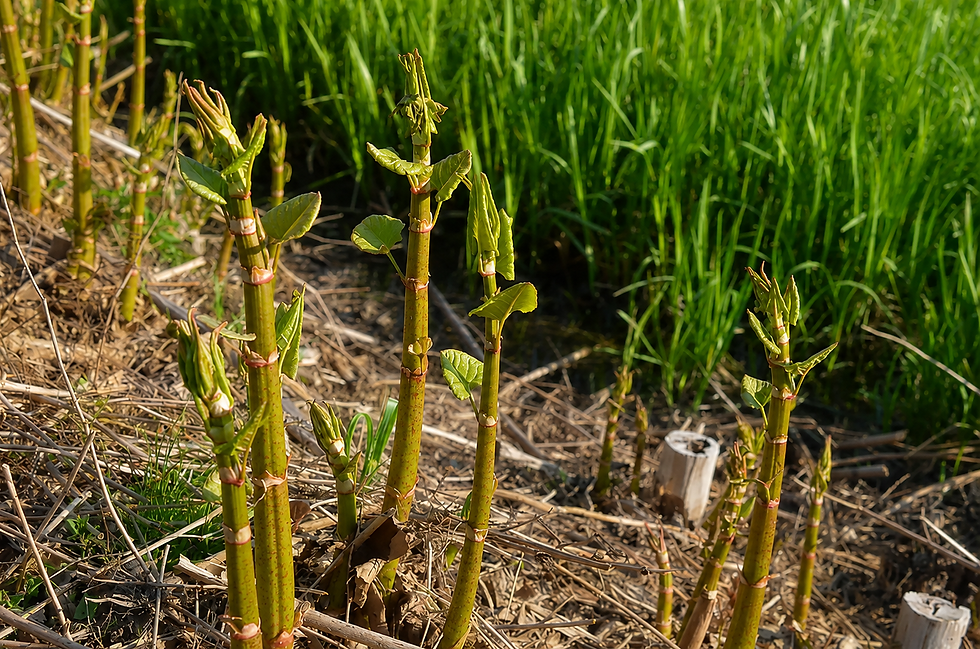
Early growth often starts as reddish-purple shoots pushing through the soil. Within weeks, these shoots can turn into thick bamboo-like stems with large shield-shaped leaves.
At its peak, Japanese knotweed can grow:
Up to 10cm per day
Over 2 metres tall in a single growing season
Several metres wide underground through rhizomes
This rapid growth is one reason knotweed becomes difficult to control without proper treatment.
Many people underestimate small patches because the plant can appear manageable early in the season. Unfortunately, the underground rhizomes may already extend far beyond the visible canes. If you're unsure what you're looking at, our free knotweed identification service can help confirm whether you have an infestation.
Does Japanese Knotweed Grow Quickly Underground?
Yes, and this is usually the bigger issue.
The visible stems are only the surface layer of the plant. Beneath the soil sits an extensive rhizome network which stores nutrients and allows the infestation to regenerate repeatedly.
Japanese knotweed rhizomes can:
Spread several metres laterally underground
Remain dormant for years
Regrow from tiny fragments
Survive after cutting or disturbance
This is why digging, strimming or attempting DIY removal often makes the problem worse rather than better. Even a small piece of rhizome moved into another part of the garden can start a fresh infestation.
Why Does Japanese Knotweed Spread So Fast?
Japanese knotweed spreads quickly because it is extremely resilient and highly adaptable. Unlike many invasive plants in the UK, knotweed does not rely heavily on seeds to spread. Most infestations spread through movement of contaminated soil or broken rhizome fragments.
Common causes of spread include:
Disturbing the Soil
Digging near Japanese knotweed can break rhizomes into smaller pieces. Those fragments can then regrow rapidly.
Moving Waste Incorrectly
Japanese knotweed is classed as controlled waste. Transporting contaminated soil or plant material without proper handling can spread it to new locations. Our excavation and disposal service ensures contaminated material is handled and removed in full compliance with environmental regulations.
Cutting Without Treatment
Repeated cutting alone rarely kills the plant. In many cases, it simply triggers further regrowth.
Nearby Infestations
Rhizomes can spread beneath fences, patios, driveways and neighbouring boundaries without being immediately visible.
What Time of Year Does Japanese Knotweed Grow Fastest?
Growth usually accelerates between May and August. Spring is when the first shoots appear, but summer is when the plant becomes most aggressive. Dense foliage develops quickly, blocking sunlight from surrounding plants and allowing knotweed to dominate the area.
By late summer and early autumn, the plant begins moving nutrients back down into the rhizome system before winter dormancy. This seasonal cycle is important because treatment timing can affect how successful control measures are.
You can view our IAPS Species Survey and Treatment Calendar for guidance on the optimal windows for survey and treatment activity.
Can Japanese Knotweed Damage Property?
There is often confusion around this topic. Japanese knotweed is not a magical plant that destroys every building it touches. However, it can exploit weaknesses in structures and surfaces.
It has been known to grow through:
Cracks in concrete
Weak points in paving
Drainage systems
Retaining walls
Garden structures
The bigger issue for many homeowners is the impact on:
Property sales
Property value
Neighbour disputes
Development projects
Lenders and surveyors usually want evidence that the infestation is being professionally managed. If you are in the process of buying or selling, our page on selling a house with Japanese knotweed covers what you need to know.

How To Stop Japanese Knotweed
If you are wondering how to stop Japanese knotweed properly, the safest option is usually professional treatment and long-term management. The right approach depends on the size of the infestation, the type of land involved, access restrictions, development plans, and how quickly the knotweed needs to be controlled. You can explore our full range of knotweed treatment options to find the approach most suited to your situation.
Many homeowners assume there is a quick DIY solution. In reality, Japanese knotweed treatment often takes time because the underground rhizome system is extremely resilient.
Chemical Treatment
Chemical treatment is one of the most common and cost-effective ways to control Japanese knotweed.
Most herbicide programmes take between 24 and 48 months depending on the maturity of the infestation, weather conditions, and how aggressively the knotweed is growing. Treatments are usually carried out across multiple growing seasons to gradually weaken the rhizome network underground.
Different application methods may be used depending on the site, including stem injection, targeted spraying, cut stem treatment, and root-focused application methods.
Late summer and early autumn are often important treatment periods because the plant naturally begins pulling nutrients back into the rhizomes during this stage of growth.
It is important to be cautious of companies promising complete eradication within a single growing season using herbicides alone. Mature infestations rarely disappear that quickly, and most legitimate treatment plans involve ongoing monitoring and retreatment.
Organic Japanese Knotweed Treatment
Organic treatment methods are becoming increasingly popular, particularly on environmentally sensitive sites or areas close to watercourses. These approaches often focus on targeted electrical treatment systems that deal with individual plants without affecting surrounding vegetation. Treatment periods are typically shorter than traditional herbicide-only programmes, often ranging from 12 to 18 months depending on conditions.
This type of treatment can work well in ecological areas, schools and parks, protected landscapes, areas where chemical use is restricted, and sites with surrounding vegetation that needs preserving. For many commercial sites and local authorities, lower-impact treatment methods are becoming an increasingly attractive option.
Minimal Dig and Herbicide Programmes
Some infestations are too aggressive for herbicide treatment alone but do not require full excavation. Minimal dig strategies remove the densest and most difficult sections of rhizome growth while leaving less contaminated areas to be treated through controlled herbicide programmes and soil management. This approach can reduce treatment periods to around 12 to 24 months and is commonly used where site access, budgets or development schedules need a more balanced solution.
Bunding and Containment Areas
On large construction or redevelopment sites, knotweed-contaminated soil is sometimes relocated into specially managed treatment zones known as bunds. This allows development work to continue elsewhere on site while the contaminated material undergoes a structured herbicide treatment programme over several growing seasons. You can find out more about our cell burial and bund barrier membrane solutions for commercial and residential applications.
Root Barrier Capping Systems
Capping systems provide an immediate containment solution by sealing knotweed beneath specialist root barrier membranes. These membranes are designed to resist puncture and contain the rhizome system below ground level. In some development situations, this method can effectively prevent regrowth from impacting active areas of the site. Our cell burial and bund barrier membrane page covers this option in more detail.
Capping is commonly considered when immediate site access is needed, excavation is not practical, certain areas will remain undisturbed, or hard landscaping or car parks are planned above affected ground.
On-Site Burial
On-site burial is another instant containment option often used on larger sites. Contaminated material is excavated and buried within carefully designed containment cells elsewhere on the property. This allows developers to avoid transporting large volumes of controlled waste off-site while still isolating the infestation safely. This approach is usually better suited to areas where future deep excavation works are unlikely.
Screening, Sorting and Incineration
For larger infestations, specialist soil screening and soil sorting techniques can separate contaminated rhizome material from unaffected soil. This process can significantly reduce the amount of waste requiring disposal and lower overall project costs. In some cases, contaminated material may also be incinerated on-site under strict environmental controls.
The exact process depends heavily on soil conditions, infestation size, access restrictions, environmental permits, and development requirements.
Excavation and Removal
Excavation and disposal remains one of the fastest ways to remove Japanese knotweed from a site entirely. This process involves digging out the infestation and transporting contaminated material to licensed waste facilities. Because Japanese knotweed is classified as controlled waste, disposal must follow strict environmental regulations.
Excavation is often chosen where development deadlines are tight, mortgage or property sale issues need resolving quickly, infestations are severe, or space does not allow long-term treatment programmes. Professional excavation strategies can also reduce waste volumes significantly by carefully targeting affected areas rather than removing unnecessary soil.
Biological Control
Biological control is still being researched in the UK and other countries. This method involves introducing natural species that feed on Japanese knotweed in an attempt to suppress growth over time. While trials continue, there is currently no widely adopted biological solution capable of reliably eradicating mature infestations on residential or commercial land.
For now, Japanese knotweed remains a long-term management issue that usually requires professional control methods rather than a single permanent cure.
Mechanical On-Site Screening (SOS System)
Mechanical on-site screening—often referred to as the SOS (Save Our Soil) method—is an eco-conscious engineering technique used to instantly clear land without relying heavily on chemicals or paying expensive landfill dumping fees.
Because Japanese knotweed is legally classified as controlled waste, this process must be executed by an accredited professional using specialised heavy machinery.
The SOS process follows a highly controlled sequence:
Excavation: Contractors dig up the soil within the 7-metre horizontal zone where roots are suspected to be hiding.
Mechanical Screening: The excavated soil is loaded into a mobile mechanical sifter or "trommel" screen on the property.
Root Separation: The machinery aggressively separates dense earth from the lightweight, invasive rhizome fragments (even pieces as small as 1 cm).
Soil Reclamation: The cleaned, validated soil is immediately layered back into your landscape and compacted, removing the need for massive haulage and off-site disposal costs.
Destruction: The collected root fragments are securely isolated and destroyed through deep burial or high-heat incineration in strict compliance with environmental regulations.
Micro-Treatments: Because no mechanical system can guarantee 100% eradication on day one, a professional will typically conduct targeted chemical stem injections on any minor regrowth during the following late summer or early autumn.

How Long Does It Take To Kill Japanese Knotweed?
There is no instant fix. Even with professional treatment, Japanese knotweed management often takes several years. That is because rhizomes store significant energy reserves, dormant fragments can regrow later, seasonal regrowth cycles must be monitored, and complete eradication takes persistence. Be cautious of any company promising overnight removal with no follow-up monitoring. Our FAQ page covers many of the most common questions about treatment timescales and what to expect.
Signs You May Have Japanese Knotweed
People often confuse knotweed with bamboo, bindweed or other fast-growing plants. Our knotweed identification guide can help you tell the difference.
Common signs include:
Spring — Red or purple shoots emerging from the ground
Summer — Tall bamboo-like stems with green heart-shaped leaves arranged in a zig-zag pattern
Late Summer — Small creamy-white flowers appearing in clusters
Winter — Brown hollow canes left standing above ground while rhizomes remain active below the surface
If you are unsure, professional identification is always worthwhile before attempting treatment.
Should You Worry About Japanese Knotweed?
Finding Japanese knotweed on your property is stressful, but it is manageable when dealt with properly.
The biggest mistakes usually happen when people ignore it for too long, attempt aggressive DIY removal, move contaminated soil, or cut it repeatedly without treatment.
Early action is normally cheaper, simpler and far more effective than waiting until the infestation spreads further. If you suspect Japanese knotweed is growing on your property, a professional Japanese knotweed survey can help confirm the extent of the infestation and recommend the safest treatment approach.
You can also review our Japanese knotweed survey requirements page to understand what lenders and surveyors typically expect. For homeowners dealing with active growth, our domestic Japanese knotweed removal service can help identify, manage and treat infestations before they become harder to control. Contact us today to speak with one of our specialists.


Comments