


Knotweed Removal Costs
How Much Does Japanese Knotweed Removal Cost?
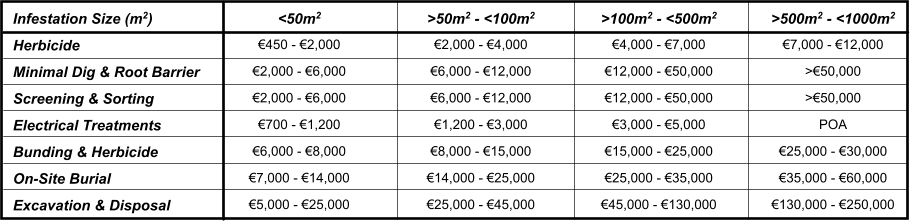
The cost of Japanese knotweed removal can vary significantly depending on the size of the infestation, the method of treatment and the level of risk involved.
For smaller, contained infestations, costs may be relatively manageable. However, where knotweed has spread extensively or is located near buildings, boundaries or development land, the cost can increase considerably.
In most cases, removal costs range from a few thousand pounds or euros through to much higher figures for large or complex sites. While this gives a general indication, the only reliable way to determine cost is through a professional survey.
Understanding what drives these costs is the first step in making the right decision.
What Affects the Cost of Knotweed Removal?
Japanese knotweed is rarely a simple, surface-level issue. Because the plant spreads underground through rhizomes, accurate knotweed identification is essential to understand the full extend of the problem and the visible growth often represents only part of the problem. One of the biggest cost factors is the overall size of the infestation. Larger areas require more time, labour and materials to treat or remove. The depth and spread of the rhizome system also plays a significant role, as deeper infestations require more extensive excavation or longer treatment programmes.
Location is another key consideration. Knotweed growing close to buildings, drains or boundary lines can be more difficult and expensive to deal with due to the risk of structural impact and the need for careful handling.
Access to the site can also influence pricing. Restricted or difficult access may require specialist equipment or additional labour, which increases overall cost.
Finally, the chosen removal method has a major impact on price. Some approaches are more cost-effective but take longer, while others provide immediate results at a higher upfront cost.
Comparing Knotweed Removal Methods and Costs
There is no single solution for Japanese knotweed removal. The most appropriate method depends on the urgency of the situation, the type of property and the long-term objectives.
Herbicide Treatment and Management Plans
Herbicide treatment is often the most cost-effective option in the short term. It involves applying specialist treatment over multiple growing seasons to gradually control and reduce the infestation.
This approach is commonly used where immediate removal is not essential, such as land that is not being developed or properties that are not currently being sold.
While the upfront cost is lower, it requires patience and ongoing monitoring. For some property transactions, lenders or buyers may require faster resolution.
Excavation and Licensed Disposal
Excavation is the fastest and most definitive way to remove Japanese knotweed. It involves physically removing contaminated soil and transporting it to licensed waste facilities.
This method provides immediate results and is often required for property sales, development sites or situations where time is critical. For some property transactions, lenders may also require faster resolution to meet mortgage approval requirements, which is why when selling a house with Japanese Knotweed, excavation is often preffered.
However, it is typically more expensive due to the scale of work involved, transport costs and strict disposal regulations.
On-Site Burial and Root Barrier Systems
On larger sites, particularly development land, on-site containment can be a cost-effective alternative to full removal.
This involves relocating contaminated material into a controlled area and installing root barrier systems to prevent spread.
While this reduces disposal costs, it requires careful planning, space and long-term monitoring. It is often used where excavation off-site would be impractical or unnecessarily expensive.
Soil Screening
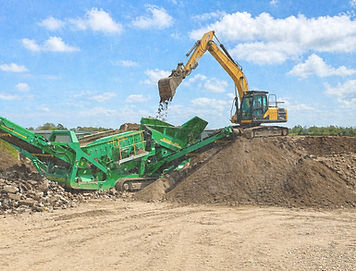
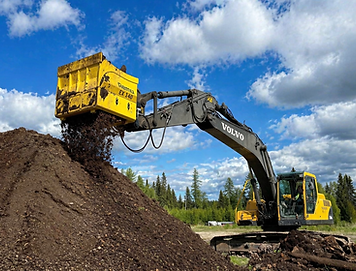
How Soil Screening Can Reduce Knotweed Removal CostsOn suitable sites, soil screening can significantly reduce the overall cost of Japanese knotweed removal. Using advanced screening systems such as the Save Our Soil (S.O.S.) process, contaminated soil is processed on-site to separate out knotweed rhizomes and plant material, leaving clean soil that can be safely reused.
This approach avoids the need to remove and dispose of large volumes of soil off-site, which is often one of the most expensive parts of knotweed remediation. By reducing transport, landfill and backfill requirements, soil screening can lower project costs substantially while also speeding up timelines.
For larger sites, development land or areas with sufficient space, this method can be the difference between a high-cost excavation project and a far more efficient, cost-controlled solution.
Additional Costs You Should Consider
Beyond the primary removal method, there are several additional costs that can influence the overall price.
A professional Knotweed survey is usually required to assess the extent of the infestation and recommend the most suitable approach. This is often the first step and provides the foundation for accurate pricing.
Waste transport and disposal costs can be significant, particularly for excavation projects, as knotweed material must be handled in line with environmental regulations.
Ongoing monitoring and follow-up visits may also be required, particularly for herbicide treatment programmes. These ensure that the infestation is fully controlled over time.
In many cases, documentation such as management plans and insurance-backed guarantees are also required. These are particularly important for property sales and mortgage approval.
Does Japanese Knotweed Increase Over Time?
Yes, and this is one of the most important factors when considering cost.
Japanese knotweed spreads underground and can remain dormant for long periods before re-emerging. The longer it is left untreated, the wider the infestation can spread and the more complex the removal becomes.
Early intervention often results in significantly lower costs, as smaller infestations are easier to manage and require less extensive work.
Delaying action can lead to higher removal costs, increased risk and more disruption in the future.
Is It Cheaper to Treat or Remove Knotweed?
This depends entirely on your situation.
Treatment plans are generally more affordable upfront and can be effective over time. However, they require ongoing monitoring and may not be suitable where immediate results are needed.
Excavation offers a faster solution but comes with higher initial costs. For property sales, mortgage approval or development projects, this is often the preferred option due to the certainty it provides.
Choosing the right approach depends on your timeline, budget and the requirements of lenders, buyers or planning authorities.
How to Get an Accurate Knotweed Removal Cost
Because every infestation is different, accurate pricing can only be provided following a professional assessment.
A knotweed survey will determine:
-
The size and extent of the infestation
-
The level of risk to structures and boundaries
-
The most suitable treatment or removal method
-
A clear cost estimate based on your specific situation
Without this, any pricing should be treated as a general guide rather than a fixed figure.
Knotweed Removal Costs Across the UK and Ireland
We provide Japanese knotweed removal services across both the UK and Ireland, working with homeowners, developers and commercial landowners.
Our approach focuses on delivering the most effective solution for each site while ensuring compliance with environmental requirements and supporting property transactions.
Get a Quote for Knotweed Removal
If you are dealing with Japanese knotweed, taking action early can reduce costs and prevent further spread.
Our specialists can assess your site, recommend the most suitable approach and provide a clear, tailored cost estimate.
Contact us today to arrange a survey and take the first step towards resolving your knotweed issue.